

Asthma is an important chronic inflammatory condition of the lower airway (bronchi). It has periods of flare-ups (called exacerbations– when symptoms temporarily and significantly worsen), especially during season change, exposure to dust, air pollution or environmental irritants, and during stress, illness or infections.
Why and how does Asthma Occur?
It occurs due to an abnormal inflammatory response of the airway to specific triggering substances called allergens (as seen in 60-70% of cases of asthma that are allergic), which are otherwise harmless and do not affect the general population.
Known allergens include dust (house dust mite), pollen, certain food items, fungi, insects, and animal dander. Irritant substances, drugs, infection, temperature changes, physical activity, stress, etc, can also be potential triggers of some forms of asthma. The inflammation causes narrowing of the bronchi (bronchoconstriction), which leads to difficulty in breathing and cough.
Asthma usually starts in childhood (other types of asthma may start in adulthood), and is commonly associated with a family history of asthma itself or other allergies of the nose (allergic rhinitis) or skin (eczema/ atopic dermatitis).
What are the Symptoms?
The cough in asthma is usually dry and not associated with much phlegm (sputum with mucus), however, an increase in phlegm may be seen during a respiratory infection.
Asthma breathlessness is typically worse at night or early mornings. Wheezing (a whistling sound due to breathing through a narrow airway) and a feeling of chest tightness are common with asthma attacks.
Asthma is intermittent and reversible in nature and is not a progressive condition. It may even get better with age or time. By itself, it is not life-threatening or dangerous, and most patients lead a fulfilling life controlled well on medications (mainly inhalers).
What are the Tests needed for Diagnosis and Evaluation?
The treating physician may perform certain tests, including blood and sputum tests, and evaluation of lung function (pulmonary function tests – PFT) by spirometry to assess the flow and pressures in the airway.
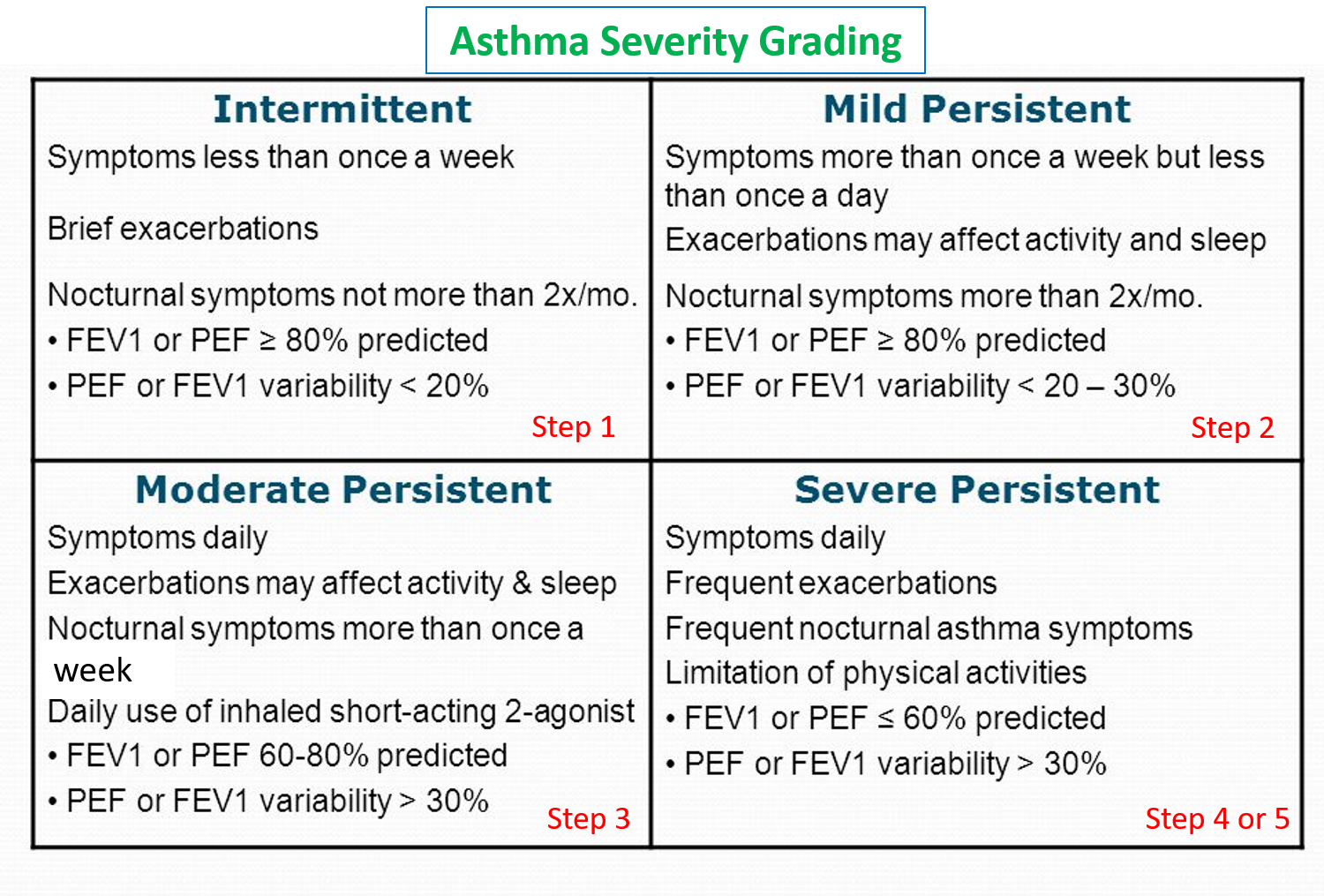
Asthma is classified, and its severity is graded in accordance with the parameters on spirometry (forced expiratory volume in the first second – FEV1, forced vital capacity FVC, and peak expiration flow PEF), symptoms, and exacerbation frequency.
What are the General Precautions for People with Asthma?
Management has to be a combination of lifestyle measures and regular medication.
Allergen and Irritant Avoidance: One can understand the causative allergen with experience or maintain a symptom diary (for example, exposure to dust or seasonal pollen triggering an attack). Smoking should be given up. If industrial or occupational exposure is inevitable, a change of job profile or wearing appropriate protective masks along with regular washing of the nose and mouth should be followed.
Physical Activity (PA) and exercise: While integral to health and maintenance in asthma to improve treatment outcomes, it should be kept in mind that exercise is one of the known triggers of an asthma attack. Therefore, it is important to keep some points of care in mind while adapting an exercise or PA regimen suitable for one’s asthma into one’s daily routine. Practicing effective breathing techniques regularly can help enhance lung capacity, decrease breathlessness, and reduce exacerbations.
What are the Medications available for managing Asthma?
It is important to take medications regularly according to the prescribed timing and dose. Follow-up should be regular with the treating physician for evaluation of symptom control and lung function.
Inhalers
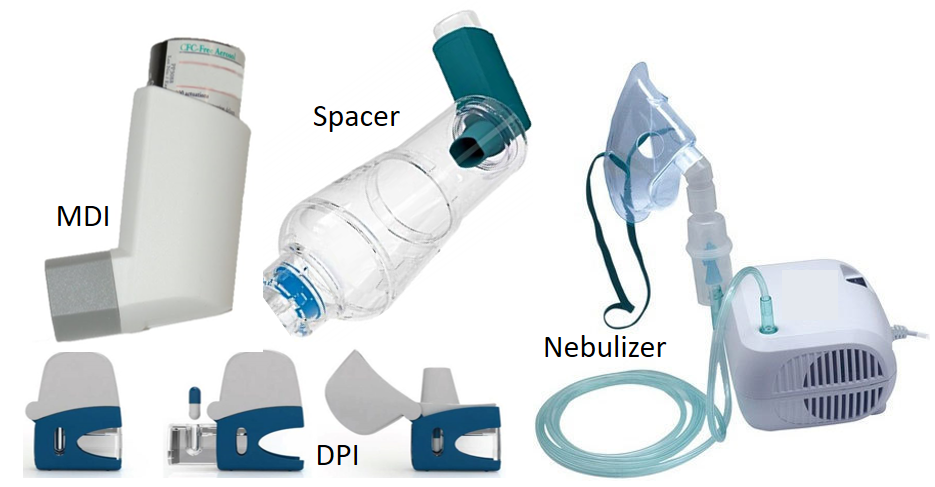
The mainstay for asthma and COPD treatment is inhalers. They are most effective and easy to use, with excellent acceptance and tolerance. Inhalers can be either DPIs (Dry Powder Inhalers) or MDIs (Metered Dose Inhalers). In DPIs, a capsule containing the drug dose in powder form is inserted into the inhaler, and the powder is inhaled through a deep breath. While in MDIs, the drug is in the inhaler and is inhaled as an aerosol. Sometimes a spacer may be added to the inhaler to take in the drug more easily, especially in children. Using a nebulizer is another method of effectively giving inhalational medicines, where the medicine is inhaled as a mist through a mask.
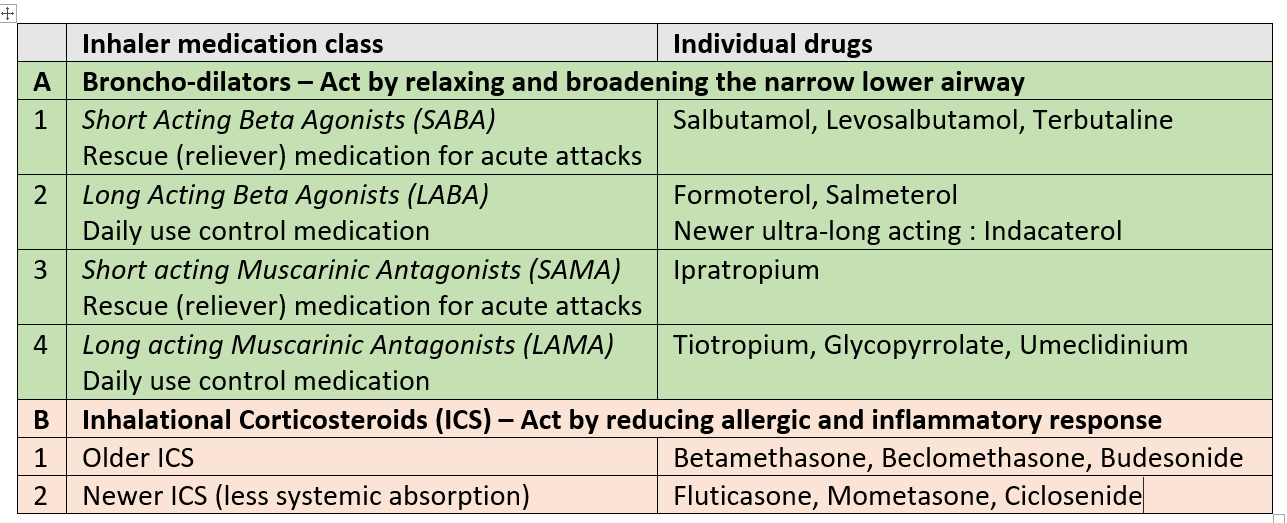
SABA and SAMA are used as reliever inhalers during breathlessness or worsening of symptoms. LABA, LAMA, and ICS are given as regular long-term anti-inflammatory controllers.
Note – Combination inhalers are commonly prescribed (SABA-SAMA, LABA-LAMA, LABA-ICS, LABA-LAMA-ICS). Other ultra-long-acting once-a-day LABAs like olodaterol and vilanterol (in combination with the ICS fluticasone) are also approved and available in some countries.
Oral medicines
Oral medications may be prescribed as an add-on during times of exacerbations, infection, or physical stress for better symptom control. These include oral corticosteroids, bronchodilators (etofylline, theophylline), and anti-allergics like antihistamines and montelukast.
Note – SABA medicines, as well as corticosteroids, are available as oral tablets as well as injections. These may be given in severe attacks and emergencies.
Biologicals
Biological injections (MAbs) act by targeting specific cytokines (called interleukins- IL), which are inflammatory messenger proteins implicated in airway inflammation. These include omalizumab (anti-IgE) and newer ones approved in some countries like mepolizumab, reslizumab, and benralizumab (anti IL5), and dupilumab (anti IL4 and IL13).
These are indicated in severe and uncontrolled asthma cases. The US FDA recently approved tezepelumab, the first biologic that targets the airway epithelial cytokine thymic stromal lymphopoietin (TSLP), for severe asthma as an add-on maintenance treatment of adult and pediatric patients aged 12 years and older.
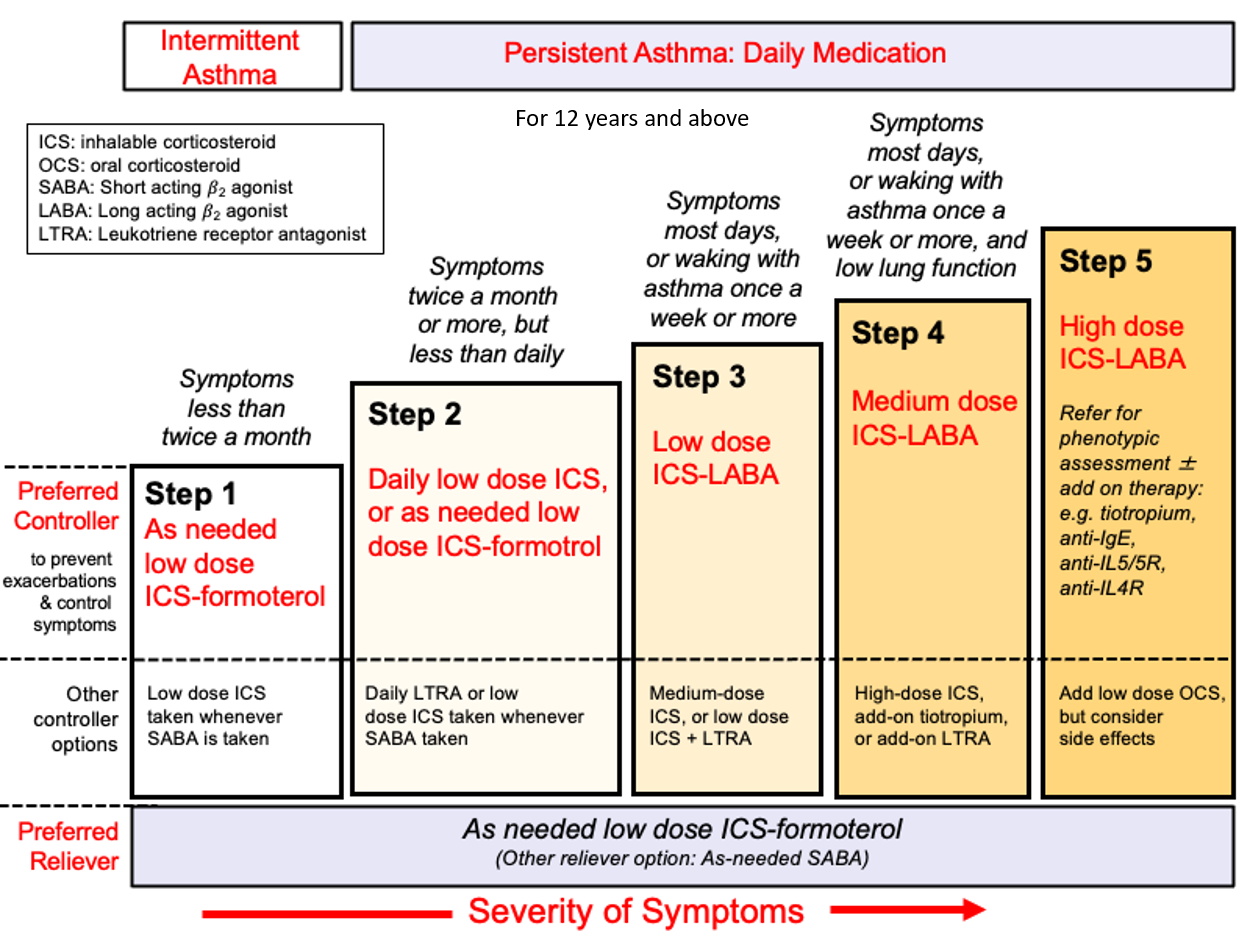
ASTHMA SEVERITY GRADING, CLASSIFICATION, AND TREATMENT
Also read:
3 Effective Techniques to improve Breathing capacity and control
For any query, additional information or to discuss any case, write to info@drvarsha.com, and be assured of a response soon.
REFERENCES