

Yes, substance addiction can sometimes point to an underlying mental health problem. But it doesn’t automatically mean someone has one.
Lots of people drink or use drugs for reasons that have nothing to do with a diagnosable condition. Still, the overlap is real. When both conditions occur at once, it’s known as a co-occurring disorder, meaning someone has a mental health condition and uses substances at the same time.
This condition is actually not rare. SAMHSA’s NSDUH 2024 release revealed that roughly 21.2 million U.S. adults struggled with this issue that year. That many people is clear proof that substance use and mental health problems can go hand in hand.
What Does Substance Addiction Have to Do With Mental Health?
The link between substance addiction or substance use disorder (SUD) and mental health often comes down to how they influence each other.
● Someone with social anxiety has a couple of drinks before a party, just to feel normal
● Someone with depression smokes cannabis most nights because that’s the only route to sleep
● Someone with unresolved trauma uses opioids or benzodiazepines to numb painful memories
As you can see, none of these people started out with substance misuse in mind. They just wanted a workaround for the pain and emotions they face.
The problem is that these workarounds can quietly turn into dependence, which only makes the emotional symptoms worse. It can even be fatal.
The CDC reported that 37% of the people who died from an overdose in 2024 also had some form of mental health challenge.
What Are Co-Occurring Disorders?
Co-occurring disorders happen when someone has both a mental health condition and a substance use disorder. We gave some examples earlier, such as someone with social anxiety who drinks alcohol before meeting people.
There are also lots of other scenarios where people have both a mental health issue like depression, post-traumatic stress disorder, or bipolar disorder along with substance use problems. Either one can show up first. Sometimes mental health symptoms come before drinking or drug use.
Other times, substance use triggers or escalates mental health symptoms.
The truth is that the sequence doesn’t matter. What matters is addressing both, and this is where proper co-occurring disorders treatment comes in, preferably in a clinical setting. The idea is that both conditions should be addressed as one issue.
Icarus Wellness & Recovery explains it very well: “The interconnected nature of these disorders creates a difficult cycle to break without specialized, integrated treatment. Research suggests that this “integrated care approach” actually delivers results and can improve treatment engagement and reduce dropout rates compared to addiction treatment alone.
What Are the Signs of Co-Occurring Disorders?
So, how can you tell if you or someone you know is dealing with this? The following patterns can serve as signs:
● Using substances, alcohol, or both to cope with anxiety, sadness, stress, or trauma
● Sudden unexplained changes in sleep, mood, relationships, career, and general social life
● Inability to get through the day without consuming alcohol or some drugs
These signs aren’t 100% proof that someone has co-occurring disorders. Only a qualified professional can make that call. The good news is that these issues are actually being taken seriously recently. In fact, the number of adults receiving treatment for co-occurring disorders increased to 25.6% in 2023, according to The American Journal of Psychiatry. While there’s still room for improvement, the numbers are really encouraging.
Why Treating Both Mental Health and Substance Use Disorder Together is Important?
Knowing the signs to look out for is one thing. Acting on them both together is the real issue.
If you treat just substance use, you’ll be leaving the emotional side unaddressed. That pain can force you to start self-medicating in a few weeks or months. And working through mental health issues while actively using drugs or alcohol rarely works. The substances won’t allow it to.
Integrated care brings these threads together, and it usually looks something like this:
● Getting a full picture of what’s going on mentally, from a licensed professional
● Addiction-focused treatment
● Individual or group therapy for the mental health side
● Medication when appropriate
● A plan for what to do if things slip
● Support for rebuilding relationships and daily routines
Another upside of integrated treatment is that it usually isn’t a one-size-fits-all approach. It tends to be personal to the person going through the issues.
When Should Someone Seek Help?
Definitely as soon as you start seeing some or all of the symptoms listed earlier. And even if you’re unsure, talk to someone for your own peace of mind. An evaluation doesn’t mean you’ll get pushed into a program you don’t want. It just gives you tangible information so you understand what’s going on.
That said, some moments can’t wait for an appointment. You can find immediate, confidential help for co-occurring mental health and SUDs in the USA by contacting the SAMHSA National Helpline.
Signs of Substance Use Disorder versus Mental Health Disorder
Sometimes, it’s easy to mistake substance use disorder for mental health problems and vice versa because of the overlap. The table below puts the common signs of each problem side-by-side to help you better understand what to look out for.
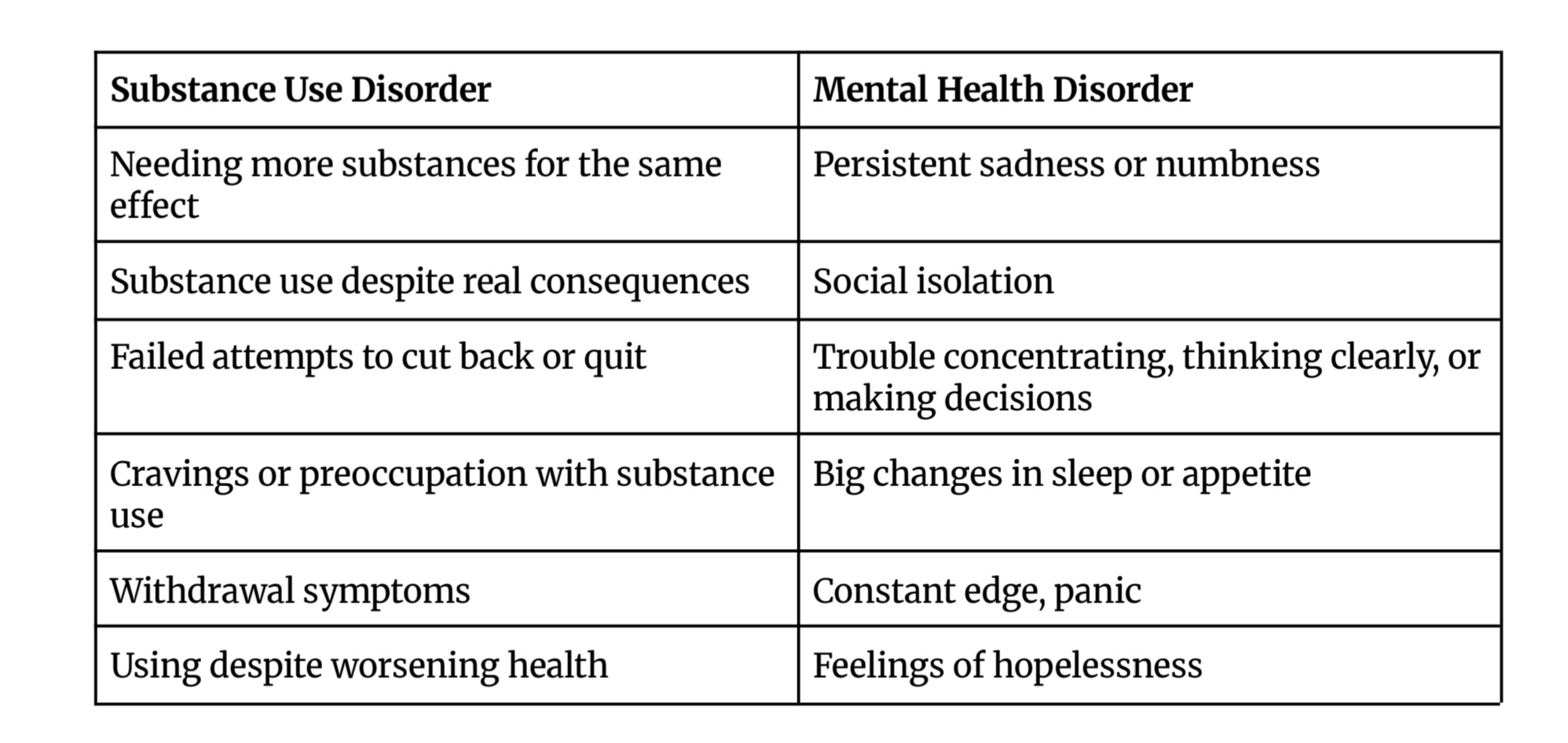 Some people show signs from both columns. That overlap is exactly what makes co-occurring disorders so easy to miss.
FAQs
Can drinking or using drugs cause a mental health disorder?
Absolutely. While occasional use might not be very risky, heavy use can alter brain chemistry, putting you at risk of co-occurring disorders. If you’re already battling with conditions like depression or psychosis, using drugs or alcohol can trigger mental health symptoms or make them far worse.
How do I know if I am self-medicating?
You’re self-medicating if you routinely grab a drink or use a substance whenever you feel sad, angry, anxious, or stressed. When that becomes your primary way to manage everyday emotions, then it’s time to consider that you might be having a bigger problem.
Can a person recover from co-occurring disorders?
Absolutely. Thousands of people recover every single year. The key is receiving personalized integrated treatment that supports your mental health and substance cravings at the same time. Equally important is a good relapse prevention strategy from your treatment center.
Final Thoughts
Substance addiction can often be a visible sign of a deeper mental health struggle, although the connection isn’t always obvious right away. Hopefully, this guide can make that connection clearer. If you or someone you care about is struggling, understand that you may not be able to deal with it at home. Get in touch with a professional before it gets out of hand.
Also read: