

Facial pain refers to pain in the areas of the cheeks and jaw. The 5 common causes that should be kept in mind are described:
DENTAL PROBLEMS
Tooth decay, cracked teeth, or a dental abscess can cause a throbbing lower-face pain that worsens with chewing or touching. The pain is often constant and sharp, localized to a specific tooth or gum area, and triggered by hot, cold, very sweet foods or drinks, or by biting/chewing down hard on the specific tooth.
A dentist should be consulted at the earliest, and the tooth/teeth and gum area involved should be addressed with dental imaging (X-ray), followed by the required procedure like abscess drainage, root canal, fillings, and, when needed, extraction.
SINUSITIS
Sinuses when inflamed or blocked can cause facial pain and pressure. The pain is like a dull ache or heaviness around the cheeks (maxillary), forehead (frontal), between the eyes (ethmoid), or deep behind the eyes (sphenoid), which often worsens when one bends forward. Maxillary sinusitis can cause pain or pressure in the upper teeth and jaw. There may be mucus discharge (often thick and yellowish-green) from the nose, with nasal congestion (stuffy nose) and, in some cases, a reduced sense of smell, bad breath (halitosis), or ear pressure.
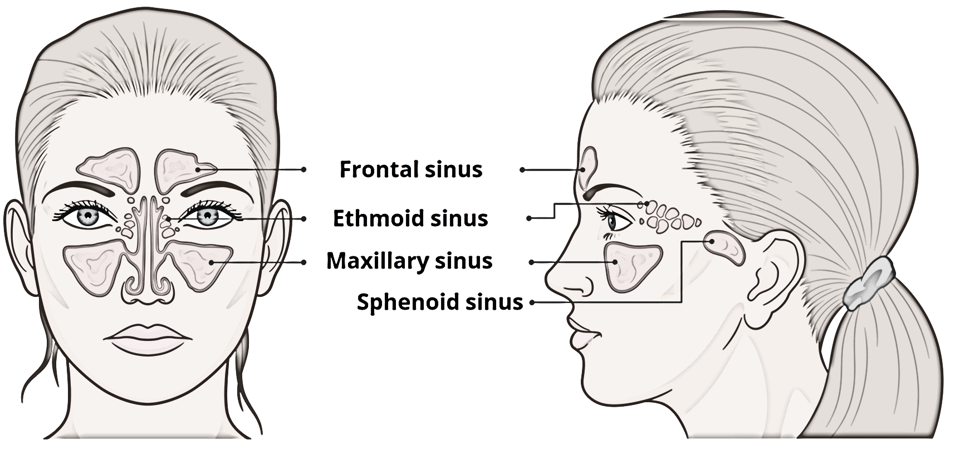
Treatment involves nasal sprays/rinses, steam inhalation, warm facial compresses, and staying well-hydrated to help clear trapped mucus and ease pressure. Short-term decongestants, saline sprays, and pain relievers (paracetamol or NSAIDs) help to manage acute discomfort. Nasal corticosteroid sprays help reduce swelling and nasal stuffiness. Antibiotics are reserved strictly for confirmed bacterial infections (lasting longer than 10 days or worsening after initial improvement), and should be taken under an ENT specialist’s monitoring. Chronic or structural cases may require surgical options like FESS (Functional Endoscopic Sinus Surgery).
TEMPOROMANDIBULAR JOINT (TMJ) DISORDER
TMJ refers to the joint between the lower jaw (mandible) and temporal bone of the skull, which is the only movable joint in the face. Temporomandibular joint disorder (TMD) is a condition causing pain and dysfunction in the jaw joints and the muscles that control jaw movement. Known causes include stress and anxiety leading to muscle tension, teeth grinding or clenching (bruxism), jaw injury or trauma to the joint, and arthritis of the joint are some known causes. Poor posture, especially forward head posture (“tech neck” ), directly puts pressure on the TMJ, as shifting the head forward by just an inch or two dramatically increases the mechanical load and passive tension on the cervical spine, neck, and jaw muscles, and tightens the front neck muscles, pulling the lower jaw (mandible) backward and altering the joint position.
Symptoms include pain that is dull, aching, or tight; felt broadly across the jaw, temples, or ear, worsened by talking, yawning, wide mouth opening, stress, or clenching/grinding. Pressing (palpating) the jaw muscles or joint in front of the ear produces or increases the discomfort (tenderness) in the jaw, face, and neck. There may be clicking, popping, or grating sounds when opening or closing the mouth, and sometimes a jaw lock or difficulty opening and closing the mouth completely may also occur.
TMD can masquerade as headaches, toothaches, or earaches. An inflamed or infected upper molar can refer pain upward into the sinuses or ear, or a lower molar problem can feel like deep jaw or chin pain. Conversely, severe muscle tension from TMJ/TMD can make healthy teeth feel sore and achy. Therefore, a multispecialty consultation with an ENT (ear, nose, and throat) specialist and a dentist may be needed.
Treatment is usually conservative self-care by eating a soft diet, avoiding gum or chewy foods, applying warm or cold compresses, and gently massaging the jaw. Over-the-counter pain relievers or nonsteroidal anti-inflammatory drugs (NSAIDs) can provide pain relief. In some cases, dental devices like custom-fitted mouth guards or stabilization splints to prevent teeth grinding may be advised. Physical therapy and relaxation techniques are supportive treatments. In severe cases, injections of corticosteroids into the TMJ may reduce inflammation, botulinum toxin (Botox) into the chewing muscles may ease tension and spasm, a procedure like arthrocentesis helps drain an abscess and manage infection, or an arthroscopic joint repair may be done. Rarely, open joint surgeries like arthroplasty or Total Joint Replacement (TMJR) are needed in very severe cases.
Myofascial pain is a subtype of TMD that involves TM muscles instead of the joint itself (categorized under myogenous TMD, the most frequent subtype of TMD). It originates in the jaw muscles of chewing (mastication) and facial or postural muscles (such as the masseter or temporalis). It is characterized by trigger points—tender, tight “knots” in the muscles that produce local or referred pain when pressed. The pain is deep, dull, and aching, and has a heavy/tired feeling in the jaw or face, often worsened by chewing, stress, clenching, or jaw movement. Bruxism (teeth grinding), poor posture, muscle overuse, or physical trauma are some known triggers. Physical therapy, posture and stretching exercises, bite splints/appliances, muscle relaxants, and trigger point injections are some of the treatment modalities.
TRIGEMINAL NEURALGIA (TN)
Compression or irritation of the trigeminal nerve (5th cranial nerve that supplies the face), causes a sudden, severe, stabbing, shooting, jabbing, or electric-shock facial pain that typically lasts from a few seconds to a couple of minutes, though it can recur dozens of times a day. It usually affects one side of the face (unilateral), most commonly the lower jaw, cheek, or teeth. Everyday activities like chewing, talking, smiling, brushing teeth, washing the face, or even a light breeze can trigger an attack; however, the pain doesn’t occur during sleep.
It is a very distressing condition and can be Classic (Primary) TN caused by a blood vessel compressing the trigeminal nerve near the brainstem, Secondary TN caused by an underlying medical condition like Multiple Sclerosis (MS), physical trauma, or tumors like meningiomas (benign tumors arising from the protective membranes- meninges surrounding the brain and skull base) or Schwannomas (benign nerve-sheath tumors), and lastly Idiopathic TN diagnosed when no clear structural or medical cause can be found.
First-line treatment typically involves anticonvulsant or anti-seizure drugs like carbamazepine or oxcarbazepine to slow down nerve impulses and irritation. If medication response is not satisfactory, options include procedures (radiofrequency thermal lesioning, balloon compression, or glycerol injection) to partially damage the nerve and block pain signals. Microvascular Decompression (MVD) is considered the gold standard surgical cure for classic TN (involves moving the offending blood vessel away from the trigeminal nerve).
ATYPICAL
Atypical Facial Pain (AFP) is a persistent, often nerve-related or central pain syndrome (sometimes categorized under persistent idiopathic facial pain) where no identifiable organic disease, infection, or structural injury can be found. The pain is ‘vague’, wandering, or poorly localized (usually cheeks and jaw), and doesn’t follow a neat anatomical joint, muscle, or single nerve pathway. The pain feels deep, constantly burning, throbbing, or persistently dull, sometimes mixed with occasional sharp stabs. Though no clear surface touch triggers like chewing or brushing are established, it is often linked with psychological or psychopathological factors, like high stress, or previous minor dental/facial procedures, but the exact cause is complex and elusive.
A multidisciplinary approach typically involves cognitive behavioral therapy (CBT), specific anti-convulsant or antidepressant medications, and specialized pain management in pain clinics, as traditional NSAIDs or standard surgery are usually ineffective.
Also read:
Headaches, especially migraine, can also sometimes cause facial pain.
Bruxism (Grinding of Teeth) – Understanding 5 Important Points