

TENDONITIS AND RELATED TERMS
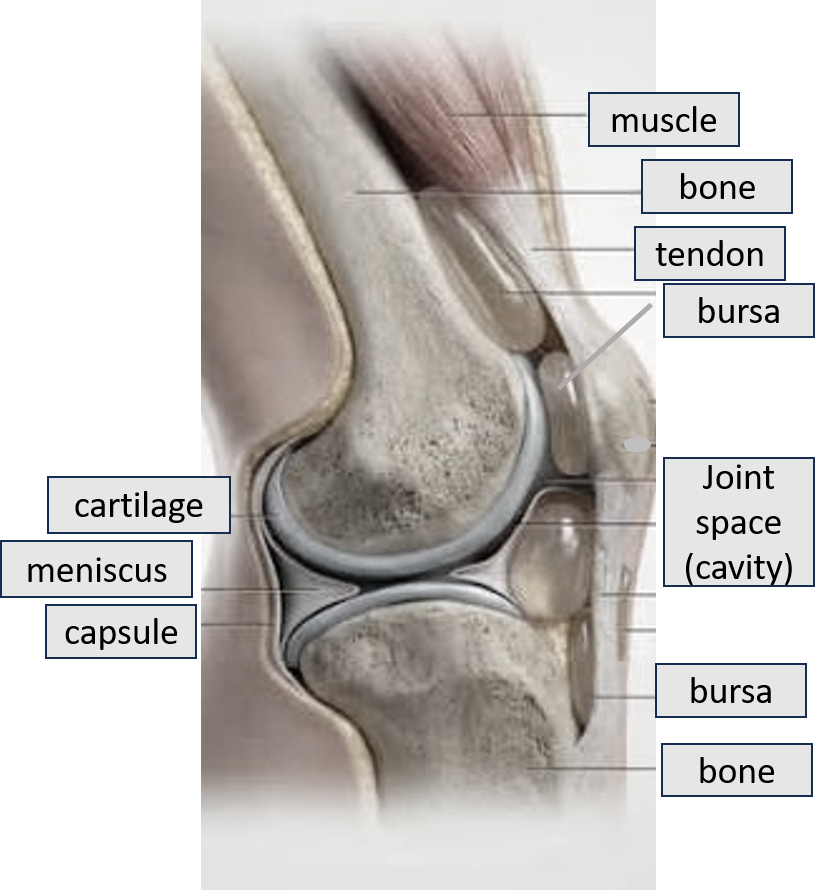
Tendonitis (also called tendinitis) is the inflammation or irritation of a tendon, which is the thick, fibrous, cord-like structure connecting muscle to bone.
Tendonitis is due to strain or injury of the particular part, causing acute inflammation, and can last a few days to weeks. Tendinosis occurs due to repeated injury or long-term overload, coupled with age, diet, and lifestyle factors that cause degeneration or degradation of the tendon. The term tendinopathy includes both tendonitis and tendinosis.
Tendonitis is often named according to its location, and the symptoms also involve sharp localized pain, and sometimes swelling, redness, and warmth in that area. Tendinosis causes aching pain, stiffness, reduced range of movement and decreased muscle strength. Sometimes instead of the tendon itself, the fluid-filled sheath around the tendon can get injured and inflamed (tenosynovitis).
Other parts of the joint can also get inflamed, like the joint capsule surrounding the joint (capsulitis), or the bursa, a small, fluid-filled sac or cushion that reduces friction between bones, tendons, muscles, and skin (bursitis).
People with underlying conditions like rheumatoid arthritis, osteoarthritis, gout, diabetes, or thyroid disorders are often at higher risk.
COMMON SITES OF TENDONITIS
Shoulder (Rotator cuff)
This involves inflammation of the tendons surrounding the shoulder joint (rotator cuff) as well as the biceps muscle tendon. It causes a dull ache around the front, side, or tip of the shoulder, with the pain worsening when reaching overhead, lifting, pushing, pulling, or rotating the arm. Night pain, especially when rolling in sleep onto the affected shoulder. Clicking, snapping sensations, stiffness, or mild-to-moderate arm weakness may also be present.
It is often seen in swimmers, players of basketball, baseball, volleyball, badminton, cricket (especially bowlers), rowers, and weightlifters, painters, or people doing heavy overhead lifting.
Elbow
- Tennis Elbow (Lateral Epicondylitis) and Golfer’s Elbow (Medial Epicondylitis): Tennis elbow causes pain and inflammation on the outside (lateral side) of the elbow and forearm, resulting from repetitive wrist-bending or gripping motions. About 50% of tennis players experience tennis elbow during their career, often due to poor backhand form or heavy equipment.
- Golfer’s Elbow (Medial Epicondylitis) causes pain on the inner (medial side) of the elbow and palm-side of the forearm, triggered by repetitive wrist bends or swinging movements, seen in Golfers (especially beginners with improper swing mechanics or “hitting from the top”).
Both tennis and golfer’s elbow occur commonly in plumbers, electricians, carpenters, butchers, gardeners, cleaners, and painters due to repeated gripping, lifting, or twisting. People who spend long hours typing or using a computer mouse can strain the forearm tendons.
Wrist
This occurs due to the inflammation of the tendons of the forearm muscles inserted in the bones of the wrist and hand. It presents as a dull ache, stiffness, or sharp pain when moving the wrist and performing everyday tasks like gripping, making a fist, lifting objects, typing, turning a doorknob, or opening jars. Sometimes a crackling, grinding, or popping sound (crepitus) may be heard when moving the joint.
The cause is usually repetitive strain injury and trauma to the wrist due to overuse from manual labor, sports (racket or throwing sports), or continuous wrist flexing and extending activities
De Quervain’s Tenosynovitis
A specific type of tenosynovitis (inflammation of the fluid-filled sheath that surrounds the tendon) that causes pain and swelling at the base of the thumb and wrist, and a sticking, catching, or snapping sensation when moving the thumb. People experience difficulty and pain when gripping, grasping, pinching, wringing, or turning the wrist.
It is frequently linked to repetitive gripping or thumb movement (new parents lifting or carrying a newborn baby with the wrists bent and thumbs extended – Mommy thumb) and in people using mobile devices or assembly tools.
Knee (Patellar)
It affects the patellar tendon, which connects the kneecap (patella) to the leg bone tibia (shinbone). It is prevalent in athletes who jump and land frequently, such as basketball or volleyball players, and is also called Jumper’s knee.
The primary symptom is localized sharp burning pain, slight swelling, and tenderness directly below the kneecap. Discomfort worsens during movements that load the knee-extending muscles, such as jumping, running, squatting, or climbing/descending stairs. A feeling of stiffness or weakness in the knee is felt, particularly after prolonged sitting, resting, or finishing a workout. Mild swelling or a feeling of thickness around the front of the knee, though visible inflammation is not always present
Ankle
- Achilles Tendonitis: Affects the Achilles tendon at the back of the lower leg, just above the heel. It is common in runners and people who do frequent pivoting or sudden speed changes.
- Peroneal Tendonitis: Affects the tendons running along the outer side of the ankle and foot, common in runners and hikers.
- Posterior Tibial Tendonitis: Involves the tendon running along the inner side of the ankle, often linked to fallen arches, ankle sprains, or stress from walking/running.
Capsulitis – Frozen Shoulder
It presents similarly, but occurs when the strong shoulder joint capsule (connective tissue surrounding the shoulder ball-and-socket joint) becomes thick, tight, sticky, and inflamed (medically known as adhesive capsulitis). It is characterized by stiffness, dull/aching pain, and a severe loss of both active and passive range of motion in the shoulder joint. It affects women more and mainly people over 40, with risk factors like prolonged shoulder immobility due to a broken arm, rotator cuff injury, post-surgical recovery, or medical conditions like stroke, etc.
The condition typically develops gradually and runs through three distinct phases over the course of 1 to 3 years: The Freezing Stage (2 to 9 months), when the pain slowly increases with any movement of the shoulder, is worse at night, and decreases the ability to move the joint. This is followed by the Frozen Stage (4 to 12 months), when pain may start to lessen, but the shoulder becomes significantly stiffer, making everyday tasks and reaching difficult. The Thawing Stage (5 to 24 months) is when the inflammation subsides, and the ability to move and use the shoulder slowly improves.
Bursitis
The bursa is a small, fluid-filled sac that acts as a cushion and reduces friction between bones, tendons, muscles, and skin near the joints. Bursitis most frequently occurs in joints that undergo repetitive motions or constant pressure: Shoulder (subacromial bursitis), Elbow (olecranon bursitis or miner’s elbow), Knee (prepatellar bursitis or housemaid’s knee), Hip (trochanteric or iliopsoas bursitis), and Heel or Base of the Big Toe.
It presents as a dull, achy pain or stiffness in or near the joint, especially when moving the joint or pressing on the area. There may be swelling, warmth, or redness over the joint. The cause is usually overuse or repetitive strain (performing the same movements or tasks over and over, such as gardening, painting, tennis, or running) or direct pressure (prolonged kneeling, leaning elbows on hard surfaces, or sitting for long periods and, in some cases, a sudden blow or impact to the joint. Sometimes the capsule may get infected (septic bursitis) due to bacteria entering through a break in the skin, and antibiotics are needed (most common in superficial bursae like the elbow).
5-POINT MANAGEMENT
The treatment for all these conditions revolves around 5 basic principles:
Rest
It is most important to avoid movements, heavy lifting, or repetitive strain that trigger sharp pain, while keeping gentle motion to prevent stiffness.
Managing pain and inflammation
This mainly includes applying ice wrapped in a cloth or a medical ice pack for 10–20 minutes, 2-3 times/day, and over-the-counter NSAIDs (non-steroidal anti-inflammatory drugs like diclofenac and ibuprofen) as tablets or creams, ointments, and gels.
Supporting the joint
This involves wearing an appropriate splint or brace during the day, especially during the acute or flare-up phase.
Physical therapy
Guided stretching and progressive strengthening exercises to restore mobility are important. Structured physical therapy, especially heavy slow resistance exercises, is essential to strengthen the tendon and joint and prevent recurrence or chronic degeneration.
Procedures
In severe and non-responsive cases, corticosteroid injection into the tendon sheath or joint capsule may be required to control the inflammation. In bursitis, joint aspiration (draining excess fluid with a needle) to check for infection or gout, may be performed. If the bursa is infected (septic bursitis), a doctor will prescribe antibiotics and, drain or surgically remove the bursa (bursectomy). Other treatment modalities include shockwave therapy, platelet-rich plasma (PRP), or surgery for severe or refractory symptoms.
Surgery is rarely needed and includes Tendon Repair or Reattachment (torn or ruptured tendon reattached to the bone using sutures or surgical anchors, Tendon Release / Tenolysis (cutting the tight tendon sheath as in De Quervain’s tenosynovitis to give inflamed tendons more room to glide without friction), and Debridement / Tenosynovectomy (removing damaged or scar tissue, or the inflamed lining of the tendon sheath).
Many minor tendon and release surgeries are performed outpatient under local or regional anesthesia (taking 30–60 minutes), while more complex repairs may require a short-term cast, boot, or splint. Initial soft tissue healing takes a few weeks, while full strength, flexibility, and return to high-impact activities or sports typically range from 6 weeks to 6 months, depending on the tendon involved and whether it was a simple release or a major tear repair. Post-operative care and physical therapy with guided range-of-motion exercises are crucial to prevent stiffness and rebuild strength.
Also read:
Acute Injuries: Bruise, Hematoma, Sprain-Strains, Fracture and Dislocation
Arthritis – Holistic Health Solutions, Medicines and Therapies