

Clinical teams need quantitative body composition data – not just BMI – to make sound decisions in oncology, nephrology, bariatric medicine, and rehabilitation. The right body composition scanners for hospitals and medical centers can mean the difference between a generic treatment protocol and one grounded in actual muscle mass, fat distribution, and hydration status. This list covers the five strongest options available to healthcare buyers in 2026, ranked by clinical fit, regulatory standing, and the depth of data they deliver.
Why Body Composition Scanners Are Becoming Standard in Hospitals and Medical Centers
Standard anthropometric measurements haven’t kept pace with what clinicians actually need. Body weight and BMI tell a physician very little about sarcopenia risk, fluid retention, or the metabolic profile of a pre-surgical patient. Body composition scanners for hospitals and medical centers fill that gap with segmental data – breaking the body into trunk, arm, and leg compartments – so care teams can track muscle loss during chemotherapy, monitor fluid shifts in dialysis patients, or set realistic targets in bariatric programs. The shift is also practical. Modern BIA devices take under two minutes per test, require no radiation exposure, and generate printable reports that slot directly into patient records.
Regulatory support has followed. FDA clearance now distinguishes clinical-grade analyzers from consumer wellness devices, and ISO 13485 certification signals that a manufacturer’s quality system meets medical-device standards, two benchmarks worth checking on any shortlist.
1. InBody USA
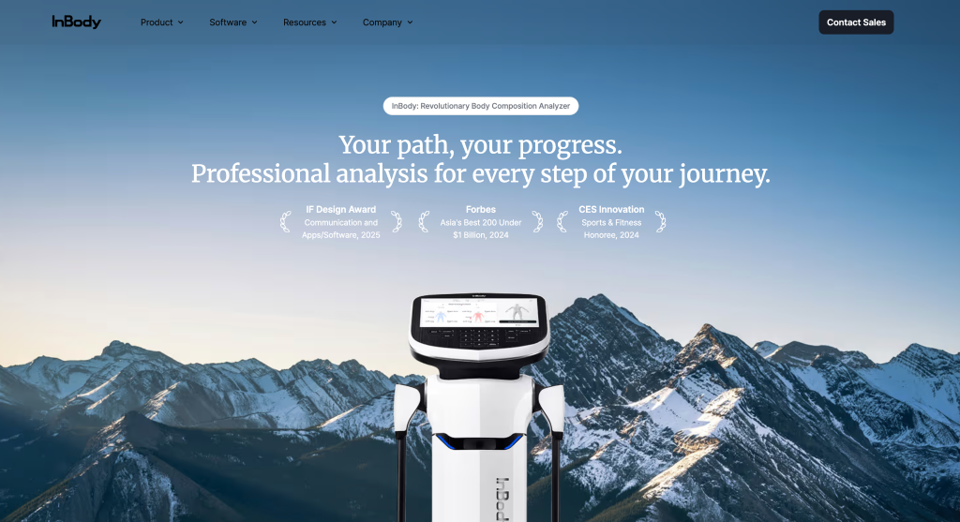
InBody USA has built widespread use in clinical settings through its DSM-BIA (Direct Segmental Measurement Bioelectrical Impedance Analysis) method, which measures each body segment independently using an 8-point tactile electrode system. That approach avoids the estimation errors common in single-frequency BIA and has been validated in peer-reviewed research. Clinicians using InBody USA clinical body composition analysis across disciplines, from pediatric endocrinology at Cincinnati Children’s Hospital to weight-management programs at Thrive Medical Weight Loss, cite the two-minute test time and the standardized output sheet as particularly useful for high-volume patient loads. The device line spans analyzers designed for corporate wellness up through medical-grade institutional models, and financing is available at 1.99% APR. Pricing requires a direct sales inquiry.
Features:
- DSM-BIA with 8-point electrode system for segmental accuracy
- Validated at 98% accuracy compared to DEXA (Mayo Clinic)
- Results in two minutes or less: body fat percentage, muscle mass, BMR, and muscle balance
- Compatible with blood pressure monitors and stadiometers for integrated clinical workflows
- Documented implementations at major health systems and specialty clinics
2. Charder Medical
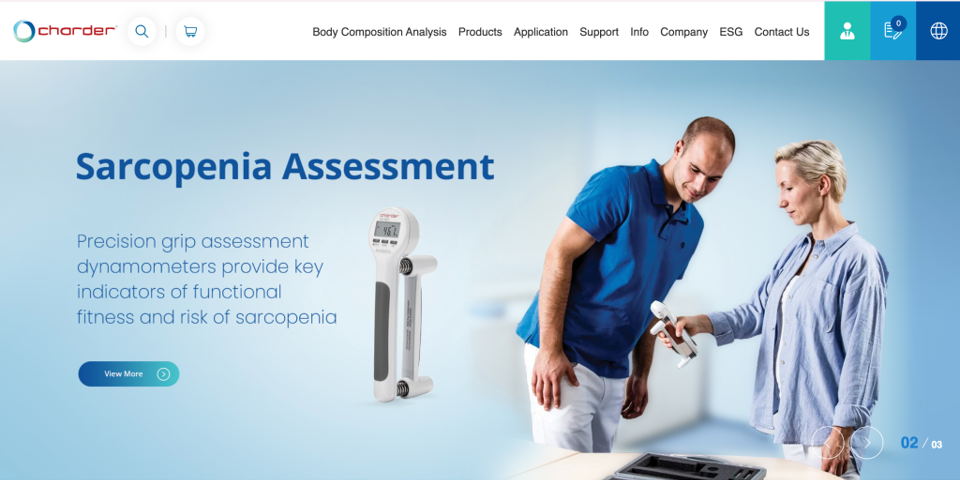
Founded in 1980 and based in Taichung City, Taiwan, Charder Medical has spent over four decades designing precision measurement devices for clinical environments. Its product line spans body composition analyzers, column scales, bariatric and chair scales, stadiometers, and handgrip dynamometers, making it one of the few vendors that can supply an entire anthropometric workstation from a single manufacturer. That breadth simplifies procurement for hospital purchasing departments. The MA801 Body Composition Analyzer earned a Taiwan Excellence Award in the Medical Device category, and the MG4800 handgrip dynamometer won a German iF Design Award, signaling attention to both engineering and usability. Charder’s global distributor network supports deployments across multiple markets, and all relevant products carry ISO 9001, ISO 13485, CE, and FDA compliance.
Features:
- Full anthropometric product line: scales, stadiometers, dynamometers, and BIA analyzers
- ISO 13485 and FDA compliance across the device range
- Award-winning design on both the MA801 analyzer and MG4800 dynamometer
- In-house lifecycle coverage: design, manufacturing, testing, and after-service support
- 501 to 1,000 employees supporting a global distribution network
3. RJL Systems

RJL Systems holds a legitimate claim as the originator of commercial BIA technology, founded in 1979 by Rudolph J. Liedtke in Clinton Township, Michigan. Its instruments have been cited in over 1,600 peer-reviewed research publications. That publication record matters in academic medical centers and pharmaceutical research settings, where the instrument’s scientific provenance influences protocol approval. The Quantum BIA series carries FDA Class II Medical Device clearance and ISO 13485 certification, and RJL reports more than 15,000 units in use across inpatient, outpatient, hospital, and university settings globally. Major clients have included Johnson & Johnson, Bristol-Myers, and Weight Watchers. The device range covers whole-body and segmental BIA, with supporting software and accessories. Team size is small (11 to 50 employees), so buyers in larger health systems should confirm service and support capacity during the evaluation process.
Features:
- Pioneer in commercial BIA, founded in 1979
- FDA Class II Medical Device clearance on the Quantum BIA series
- Cited in over 1,600 research studies and peer-reviewed articles worldwide
- Whole-body and segmental BIA options with supporting software
- ISO 13485 certified
4. Akern

Akern is an Italian biomedical manufacturer founded in 1980 and based in Pontassieve, near Florence. Now a subsidiary of PharmaNutra following an acquisition in June 2022, the company has developed more than 20 BIA devices over four decades, several of which introduced meaningful advances in measuring body compartments. Its flagship clinical instruments – the BIA 101 BIVA® PRO and the Nutrilab™ PRO – target healthcare professionals and nutritionists who need a scientifically grounded platform for monitoring patient body composition over time. The entire BIA sensor line holds Class IIA Medical Device certification under European Directives, with manufacturing audited by a third-party notified body. Akern won the FIBO Innovation Award in 2008 for segmental impedance analysis technology. The company also serves professional sports organizations, which speaks to its track record in repeated, high-frequency measurement, a useful signal for hospital programs that monitor patients across multiple visits.
Features:
- Over 40 years of BIA device development, with 20+ distinct instrument generations
- Class IIA Medical Device certification across the full BIA sensor line
- BIA 101 BIVA® PRO designed for clinical body composition monitoring
- Third-party notified body oversight of manufacturing processes
- Serves both clinical healthcare and elite sports performance markets
5. Bodystat
Bodystat was established in 1990 in Douglas, Isle of Man, and has spent its entire existence focused on a single technology: bioelectrical impedance. That narrowness is actually a differentiator. The team reports close to 100 years of collective in-house BIA experience, and the company has built a strong body of research validating its devices across renal dialysis, lymphedema management, COPD, oncology, and obesity trials. The MultiScan 5000 is the flagship clinical device, distinguished by its elimination of stray capacitance, a technical source of measurement error in lower-grade BIA instruments. Bodystat devices don’t incorporate a scale, which the company positions as a reliability feature: weight variation doesn’t corrupt the impedance measurement. The team is small (2 to 10 employees), and Bodystat explicitly markets its personal customer service as a differentiator, with direct phone access rather than automated systems. ISO 13485:2003 accreditation applies to the product range.
Features:
- MultiScan 5000 eliminates stray capacitance for measurement reproducibility
- Validated across dialysis, lymphedema, COPD, cancer, and obesity applications
- Does not incorporate a scale, removing a common source of BIA variability
- ISO 13485:2003 accredited
- Decades of focused BIA research with a large published validation library
How to Pick the Right Scanner for Your Setting
The right choice depends on three practical factors. First, measurement method: DSM-BIA captures segmental data that matters in oncology and rehab, while single-frequency whole-body BIA may be sufficient for nutrition screening. Second, regulatory standing: any device entering a U.S. hospital workflow should carry FDA clearance and ideally ISO 13485 certification from the manufacturer. Third, workflow and speed: a two-minute test that generates a printable report is workable in a busy outpatient clinic; a device requiring 10 minutes of prep and manual data entry is not. Research volume is also worth weighing. For institutional review board-governed studies or pharmaceutical trials, the instrument’s citation count and peer-reviewed validation history will be scrutinized by reviewers.
Team size and support capacity matter for multi-site hospital networks. Smaller manufacturers can offer excellent technology but may not have the service infrastructure to cover a 20-location health system.
Bottom Line
Body composition scanners for hospitals and medical centers have moved well past niche research tools. Each vendor on this list brings a proven track record, whether that’s decades of published BIA research, full-anthropometric device suites for streamlined procurement, or specialized validation in dialysis and oncology populations. Matching the right device to a specific clinical program comes down to measurement depth, regulatory documentation, and realistic support expectations for the size of the organization.